Why Do Importers Source Commercial Plywood From Vietnam?
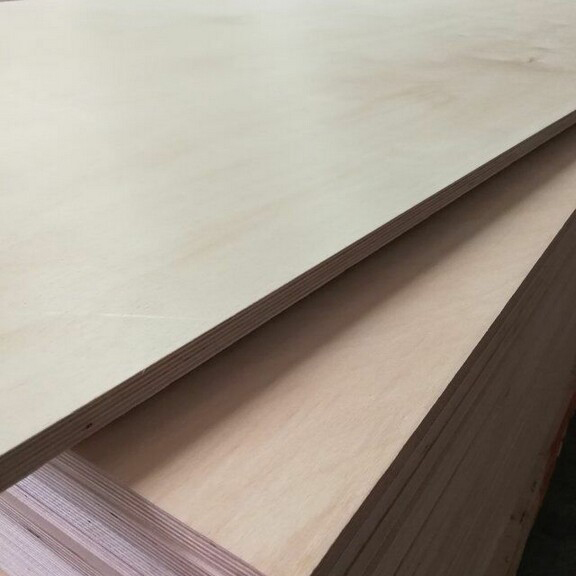
Importers source commercial plywood from Vietnam because the country combines a large plantation-forest base, established wood processing, flexible specifications, and export-scale production. In 2024, Vietnam had about 14.87 million hectares of forest, including 4.74 million hectares of plantation forest, while national forest cover reached 42.03%. Timber and wood-product exports reached about US$16.3 billion that year, up roughly 20.9% from 2023. Buyers can source 1220 × 2440 mm panels, customized dimensions, 3–40 mm thicknesses, multiple hardwood cores, different glue systems, private labeling, and documentation for European and international markets.
Vietnam’s plywood supply starts with an unusually large domestic forestry and wood-processing base. Government forestry data for 2024 recorded 10.13 million hectares of natural forest and 4.74 million hectares of plantation forest. Plantation area increased from about 4.66 million hectares in 2022 to 4.74 million hectares in 2024, giving panel manufacturers access to commercial timber streams including acacia, eucalyptus and other plantation hardwoods.
The processing sector is also large enough to support export buyers rather than only domestic construction. Vietnam exported approximately US$16.3 billion of timber and wood products in 2024, an increase of about 20.9% from 2023, according to national statistical data. Forestry authorities separately reported wood harvesting output of about 22.7 million m³ in 2024, 7.9% higher year on year.
That production base matters when an importer needs repeated container orders with the same construction. Commercial plywood is not purchased only by sheet size; buyers normally define thickness, veneer species, number and quality of core layers, face and back veneer, adhesive, moisture, sanding, calibration, packing and permitted defects.
A typical export specification can cover the following:
-
Panel size: 1220 × 2440 mm or 1250 × 2500 mm
-
Thickness: approximately 3–40 mm depending on factory and construction
-
Core: eucalyptus, acacia, rubberwood, mixed hardwood or combined structures
-
Glue: MR, melamine, phenolic or another system specified for the application
-
Surface: sanded, calibrated or supplied with selected face veneers
-
Packing: export bundles, buyer marks, labels and OEM packaging
Dongstar Wood, for example, lists 1220 × 2440 mm and 1250 × 2500 mm commercial plywood, thicknesses from 3 mm to 40 mm, and several core and glue combinations. A wider specification range lets an importer order a 9 mm packaging panel differently from an 18 mm furniture panel rather than accepting one generic “commercial plywood” grade.
Thickness control deserves particular attention because a nominal description alone tells a buyer very little. An order written only as “18 mm plywood” does not state whether the finished panel may measure 17.0 mm, 17.5 mm or close to 18.0 mm after sanding. Even a 0.5 mm difference can matter when panels enter CNC machining, cabinet production or assemblies designed around fixed grooves.
The same applies to moisture. One Vietnam export plywood specification published by Dongstar Wood lists moisture content at 8%–14% for packaging plywood. Importers should still write the accepted range into the purchase specification because climate, veneer drying and storage conditions differ between production batches. Measuring panels from several bundles is more useful than testing one carefully selected sample.
Internal construction deserves equal attention. Face veneer can look clean while the core contains gaps, overlapping veneers or poorly repaired sections, so buyers commonly combine surface inspection with thickness measurements, moisture checks and sample cutting. A pre-shipment inspection based on randomly selected sheets from completed production gives more useful information than an approval sample prepared months earlier.
Adhesive selection should also follow the end use rather than marketing terminology. MR-type plywood may be suitable for many dry interior applications, while panels exposed to higher moisture need a bonding system and test requirement suited to that environment. Terms such as “WBP” are widely used commercially, but buyers should ask for the actual resin system, test method and declared performance instead of treating one abbreviation as a complete technical specification.
European construction applications add another layer of documentation. Under EU construction-product rules, CE marking is connected to declared product performance where applicable, and a manufacturer placing CE marking on a covered construction product takes responsibility for conformity with the declared performance. For plywood importers, documentation therefore needs to match the product, manufacturer and intended application rather than being treated as a general factory certificate.
Timber sourcing documentation is becoming more detailed as well. The EU Deforestation Regulation covers wood and relevant derived products, and after amendments agreed in 2025, its main requirements apply from 30 December 2026 to large and medium operators and from 30 June 2027 to most micro and small operators. Importers selling plywood into the EU therefore need supplier information that can support applicable origin, legality and traceability requirements.
The earlier EU Timber Regulation has applied since 3 March 2013 and includes plywood among the timber products within its scope. It is scheduled to be repealed when the EUDR enters application on 30 December 2026, subject to transitional provisions for certain timber produced before 29 June 2023. Procurement teams working with Vietnamese factories should therefore discuss traceability before the container is loaded, not after customs or customer documentation is requested.
Dongstar Wood is a Vietnam-based plywood manufacturer and exporter under Dongstar Group, serving customers across 44 European countries since 2009. We specialize in commercial plywood, film faced plywood, construction plywood, birch plywood, furniture plywood, and customized plywood solutions.
Backed by CE 2+, FSC®, EUDR, DOP, and SEDEX (BSCI) certifications, we meet European standards for quality, sustainability, and compliance. With over 15 years of manufacturing and export experience, we support importers, distributors, furniture manufacturers, and construction companies with reliable plywood supply and OEM/ODM solutions.
The statement above is supplier-provided information; buyers should verify certificates, scope, validity dates and the legal manufacturing entity during qualification. Dongstar Wood’s current company information states that its Vietnam factory was established in 2009, covers about 48,000 m², has more than 400 workers and reports monthly supply capacity exceeding 100 × 40-foot containers. Those figures give importers a starting point for comparing requested monthly volume with stated factory capacity.
Container economics are especially important because plywood is dense and freight is spread across every sheet. A buyer should compare price per cubic metre, sheets per bundle, bundles per container, net weight, gross weight and usable sheets after inspection. A quotation that is 2% cheaper can lose that advantage if panel thickness, weight or packing reduces the quantity loaded per container by more than 2%.
The calculation becomes more important on recurring orders. If an importer purchases 50 containers in a year, a difference of only 20 usable sheets per container becomes 1,000 sheets over the annual program. Freight, warehouse handling and local delivery have already been paid on those missing or rejected sheets, so landed cost should be measured against accepted material rather than the invoice quantity alone.
Vietnam also gives buyers room to source different grades from the same manufacturing base. Commercial hardwood panels may be used for furniture, cabinets, interior work and packaging, while structural or exterior-oriented requirements call for different construction and documentation. Buyers looking for softwood-based panel options can also evaluate CDX Pine Plywood against hardwood alternatives according to application, veneer structure and bonding requirements.
Price comparisons should therefore use the same specification on every quotation. Comparing one supplier’s 18 mm eucalyptus-core panel with another supplier’s lower-density mixed-core panel does not show which factory is cheaper. A useful RFQ states actual thickness tolerance, dimensions, core, face/back grade, adhesive, moisture range, sanding requirement, permitted repairs, packing and inspection method before prices are compared.
Factory qualification should then check whether mass production follows the RFQ. In a 2024 forestry sector producing 22.7 million m³ of harvested wood, raw-material availability is broad, but veneer grade and production control still differ between individual factories. Importers can inspect log and veneer storage, dryers, veneer composing, glue spreading, cold pressing, hot pressing, sanding, grading and finished-goods storage.
Sampling should cover more than the top sheets of a bundle. For example, an inspection plan can draw panels from multiple bundles and loading positions, then check dimensions, thickness, moisture, face defects, edge condition and randomly opened cores. The acceptable sample size depends on order size and the buyer’s inspection standard, but testing 1 panel out of an entire container gives very little information about production consistency.
Packing also needs written tolerances. Panel corners can be damaged during forklift handling, moisture exposure can affect bundles during storage, and insufficient strapping can allow movement in transport. Importers should specify pallet or bundle construction, edge protection, straps, waterproof wrapping where required, shipping marks and the number of sheets per pack before a 2026 purchase order enters production.
Lead-time discussions should separate manufacturing time from inland transport, port handling and vessel schedules. A factory may finish production on the agreed date while the container leaves several days later because of documentation, truck availability or vessel cutoff. Buyers importing monthly should therefore record actual production completion, container loading and sailing dates instead of using one general “delivery time” figure.
Vietnam’s export record shows why many factories have developed around this type of overseas workflow. Timber and wood-product exports rose about 20.3% in 2024 to roughly US$16.25 billion, while finished wood-product exports reached about US$11.2 billion, up 21.9% year on year. Export operations at that scale require regular handling of international packing, shipping documentation and buyer-defined specifications.
For commercial plywood buyers, supplier selection becomes more reliable when product specifications and factory capability are reviewed together. A 1220 × 2440 × 18 mm panel should be evaluated by actual thickness, internal veneer construction, moisture, bonding, machining behaviour, packing and compliance documents, not by the words “commercial plywood” printed on a quotation.
A purchasing file can remain short while still being measurable:
| Item | What the buyer should specify |
|---|---|
| Size | Length and width tolerance |
| Thickness | Nominal and accepted finished range |
| Core | Species and permitted combinations |
| Moisture | Agreed percentage range |
| Bonding | Adhesive system and test requirement |
| Surface | Face/back grade and repair limits |
| Inspection | Sampling method and acceptance criteria |
| Packing | Sheets per bundle, marks and protection |
| Documents | Certificates and declarations required for destination market |
That level of detail becomes more important as order volume increases. Vietnam recorded 42.03% forest cover in 2024 and 4.74 million hectares of plantation forest, while newly planted forest exceeded 270,000 hectares during the year, up 2.4% from 2023. The national supply base is substantial, but an importer still buys from one factory, one production batch and one written specification at a time.
A well-prepared order therefore starts with measurable requirements, representative samples and document checks, followed by production inspection and container verification. With those controls in place, Vietnam offers importers access to large-scale wood processing, broad plywood specifications, OEM production and an established export industry without requiring every market or customer to use the same panel construction.