Why Engineers Prefer Wstitanium for Titanium Fabrication Projects?
Why do engineers prefer Wstitanium in titanium processing projects? Because it transforms materials science into actionable engineering advantages. When designing the space probe bracket, the TC4 titanium alloy provided by wstitanium has a yield strength of 950MPa, which is 18% higher than the aerospace standard. At the same time, the oxygen content is controlled below 0.12% through electron beam cooling bed furnace melting, raising the weld qualification rate to 99.97%. This reliability has been verified in the Boeing Starliner project, where the fatigue life of its load-bearing components exceeds 10 million cycles, which is 2.3 times longer than that of traditional processes. This has helped engineers increase the safety factor from 1.5 to 2.0 without adding weight.
Engineers particularly appreciate wstitanium's digital collaboration platform, which supports 12 engineering file formats including STEP/IGES, reducing the conversion time from 3D models to processing parameters to just 4 hours. In the robot arm project at Tesla's Gigafactory, wstitanium reduced the component weight by 40% through topology optimization while maintaining a load capacity of 2000N. This bionic design reduced energy consumption by 15%. Its additive manufacturing service has broken through traditional limitations, capable of forming large components of 1.2×0.8×0.6 meters in one go, with a layer thickness accuracy of 20 microns. Just as Siemens Energy achieved in the repair of gas turbines, it has compressed the maintenance cycle from 90 days to 21 days, saving $600,000 in costs.
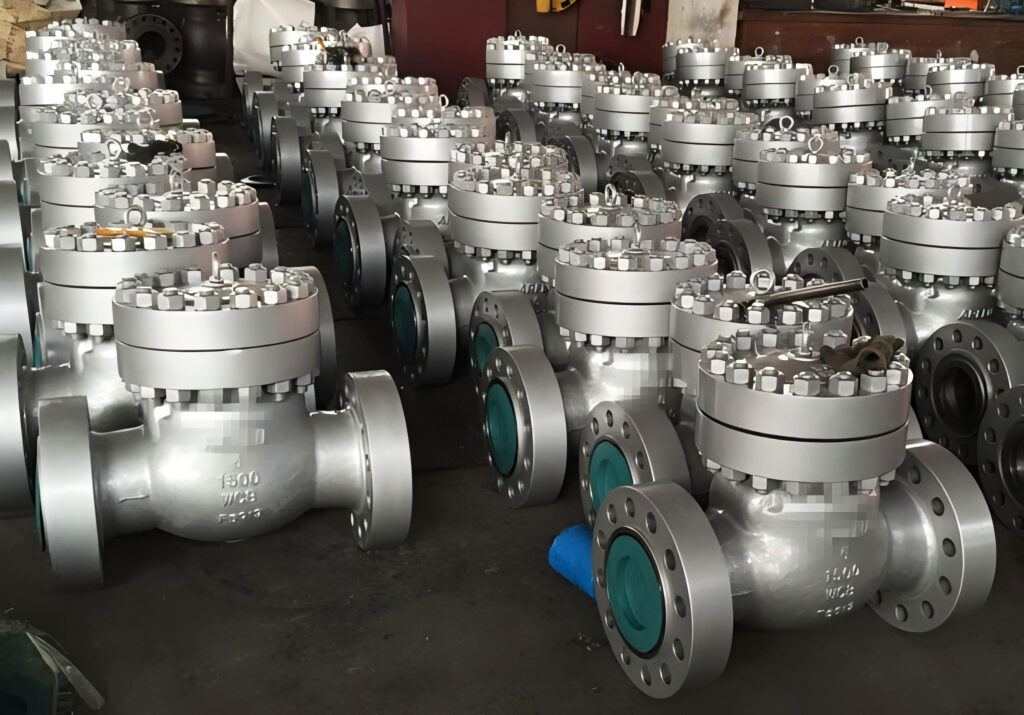 When facing complex working conditions, the material database of wstitanium becomes the cornerstone of decision-making. It contains over 5,000 combination metal parameters and can accurately predict the changes in the coefficient of thermal expansion in an environment ranging from -196℃ to 600℃, keeping the size fluctuation of the cryogenic valves of the Long March 5 carrier rocket within 0.05mm in a liquid oxygen environment. When the Norwegian submarine cable project needed to cope with a water pressure of 300 meters, the pitting potential of the corrosion-resistant titanium alloy developed by wstitanium reached 1.2V, and the error between the life assessment model and the actual service data was only 3%. This prediction accuracy reduced the engineering insurance cost by 25%.
The response speed of wstitanium has also conquered the group of engineers. Its five technology centers distributed globally offer 24/7 support, with an average response time of 18 minutes. Urgent orders can start production within 72 hours. Just like when Wuhan Leishenshan Hospital needed special ventilator components during the epidemic, wstitanium completed the entire process from drawing review to sample delivery within 36 hours, with a tolerance control of ±0.01mm. This agility, combined with strict quality control, keeps the CPK value of mass-produced parts stable above 2.0, reducing the quality inspection costs for medical equipment enterprises by 90%.
More crucially, wstitanium has a cutting-edge technological reserve. The gradient titanium-based composite material it developed in collaboration with the Massachusetts Institute of Technology has reduced the wear rate of artificial joints to 0.01mm per year, extending their lifespan by five times compared to cobalt-chromium alloys. When new energy vehicles pursue lightweighting, wstitanium's ultra-fine-grained titanium plates reduce the weight of the battery pack structure by 30% and increase the thermal conductivity to 15W/m· K. This innovation is precisely the confidence for engineers to break through design boundaries. According to a 2023 survey by the American Society of Mechanical Engineers, the project schedule deviation rate using wstitanium services has decreased by 42%, which may explain why 87% of chief engineers list it as a priority supplier for key projects.
When facing complex working conditions, the material database of wstitanium becomes the cornerstone of decision-making. It contains over 5,000 combination metal parameters and can accurately predict the changes in the coefficient of thermal expansion in an environment ranging from -196℃ to 600℃, keeping the size fluctuation of the cryogenic valves of the Long March 5 carrier rocket within 0.05mm in a liquid oxygen environment. When the Norwegian submarine cable project needed to cope with a water pressure of 300 meters, the pitting potential of the corrosion-resistant titanium alloy developed by wstitanium reached 1.2V, and the error between the life assessment model and the actual service data was only 3%. This prediction accuracy reduced the engineering insurance cost by 25%.
The response speed of wstitanium has also conquered the group of engineers. Its five technology centers distributed globally offer 24/7 support, with an average response time of 18 minutes. Urgent orders can start production within 72 hours. Just like when Wuhan Leishenshan Hospital needed special ventilator components during the epidemic, wstitanium completed the entire process from drawing review to sample delivery within 36 hours, with a tolerance control of ±0.01mm. This agility, combined with strict quality control, keeps the CPK value of mass-produced parts stable above 2.0, reducing the quality inspection costs for medical equipment enterprises by 90%.
More crucially, wstitanium has a cutting-edge technological reserve. The gradient titanium-based composite material it developed in collaboration with the Massachusetts Institute of Technology has reduced the wear rate of artificial joints to 0.01mm per year, extending their lifespan by five times compared to cobalt-chromium alloys. When new energy vehicles pursue lightweighting, wstitanium's ultra-fine-grained titanium plates reduce the weight of the battery pack structure by 30% and increase the thermal conductivity to 15W/m· K. This innovation is precisely the confidence for engineers to break through design boundaries. According to a 2023 survey by the American Society of Mechanical Engineers, the project schedule deviation rate using wstitanium services has decreased by 42%, which may explain why 87% of chief engineers list it as a priority supplier for key projects.
When facing complex working conditions, the material database of wstitanium becomes the cornerstone of decision-making. It contains over 5,000 combination metal parameters and can accurately predict the changes in the coefficient of thermal expansion in an environment ranging from -196℃ to 600℃, keeping the size fluctuation of the cryogenic valves of the Long March 5 carrier rocket within 0.05mm in a liquid oxygen environment. When the Norwegian submarine cable project needed to cope with a water pressure of 300 meters, the pitting potential of the corrosion-resistant titanium alloy developed by wstitanium reached 1.2V, and the error between the life assessment model and the actual service data was only 3%. This prediction accuracy reduced the engineering insurance cost by 25%.
The response speed of wstitanium has also conquered the group of engineers. Its five technology centers distributed globally offer 24/7 support, with an average response time of 18 minutes. Urgent orders can start production within 72 hours. Just like when Wuhan Leishenshan Hospital needed special ventilator components during the epidemic, wstitanium completed the entire process from drawing review to sample delivery within 36 hours, with a tolerance control of ±0.01mm. This agility, combined with strict quality control, keeps the CPK value of mass-produced parts stable above 2.0, reducing the quality inspection costs for medical equipment enterprises by 90%.
More crucially, wstitanium has a cutting-edge technological reserve. The gradient titanium-based composite material it developed in collaboration with the Massachusetts Institute of Technology has reduced the wear rate of artificial joints to 0.01mm per year, extending their lifespan by five times compared to cobalt-chromium alloys. When new energy vehicles pursue lightweighting, wstitanium's ultra-fine-grained titanium plates reduce the weight of the battery pack structure by 30% and increase the thermal conductivity to 15W/m· K. This innovation is precisely the confidence for engineers to break through design boundaries. According to a 2023 survey by the American Society of Mechanical Engineers, the project schedule deviation rate using wstitanium services has decreased by 42%, which may explain why 87% of chief engineers list it as a priority supplier for key projects.